Being in front of a camera can feel surprisingly uncomfortable. You may suddenly become aware of your hands, your smile, your posture and every small movement. Even people who speak confidently at work or feel relaxed in social situations can freeze when a lens is pointed at them.
That reaction does not mean you are unphotogenic. It usually means the situation feels unfamiliar and you are trying to manage too many things at once. You are thinking about how you look while also wondering where to stand, where to look and whether the photographer is getting a good result.
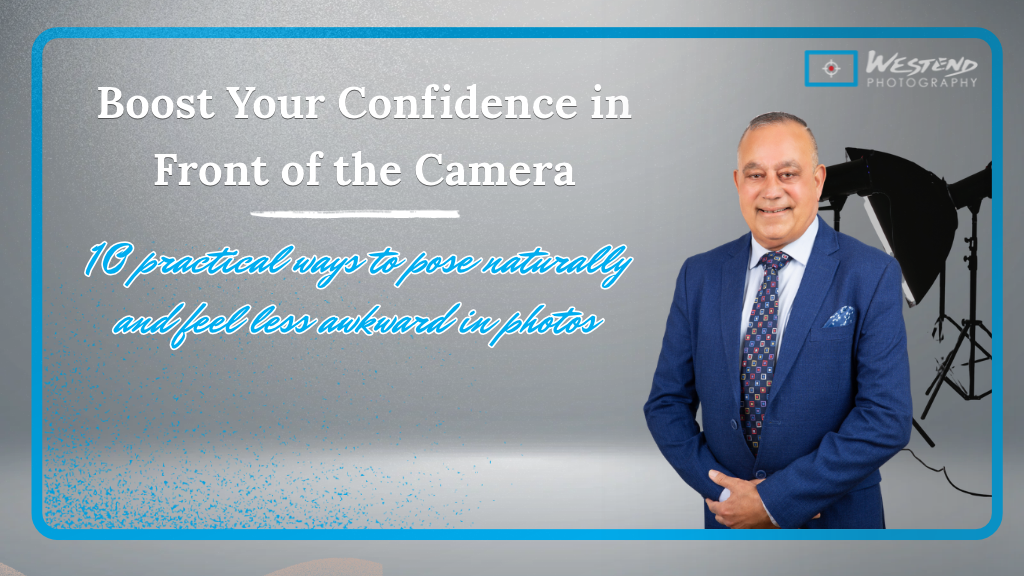
The solution is not to memorise complicated poses or pretend to be someone else. Confidence develops when you understand the purpose of the session, feel prepared and receive clear direction. The following tips explain how to boost your confidence in front of the camera and create photographs that still feel like you.
How can you feel more confident in front of the camera
Start by removing the pressure to perform. Choose clothing that feels familiar, tell your photographer what makes you nervous and let them guide your posture, hands and expression. Small movements usually feel more natural than holding a rigid pose. Give yourself time to settle into the session, and focus on the message you want the photograph to communicate rather than trying to look perfect.
1. Know what the photograph needs to communicate
Confidence becomes easier when the photograph has a clear purpose. A LinkedIn headshot may need to feel capable and approachable. A personal branding image might need to show more warmth, creativity or energy. A family portrait can focus on connection rather than professional polish.
Before the session, choose two or three words that describe how you want to come across. You might choose calm, credible and friendly, or creative, confident and open. Share those words with your photographer. They provide a better direction than a vague request to “make me look good”, because the photographer can adjust the background, lighting, body position and expression around a clear goal.
This also shifts your attention away from individual features you may feel self-conscious about. Instead of inspecting every detail, you can ask whether the photograph communicates the right feeling to the person who will eventually see it.
2. Tell your photographer that you feel camera shy
You do not have to hide your nerves. Mentioning them before the shoot helps the photographer understand what support you need. You can explain whether you dislike a particular side, feel unsure about your smile or have never had professional photographs taken before.
A helpful photographer should not expect you to arrive knowing how to pose. They should explain what will happen, demonstrate simple positions and give you one direction at a time. If an instruction is confusing or a pose feels uncomfortable, say so. Good photographs are collaborative, and honest feedback makes it easier to find an approach that suits you.
This conversation is also the right time to discuss how the images will be used. A tightly cropped corporate headshot requires different positioning from a full-length portrait or a library of personal branding images.
3. Wear something familiar and comfortable
Clothing affects more than the final look. It can change how you hold your body and how much attention you give to yourself during the session. If a jacket feels too tight, a collar keeps moving or an outfit does not feel like you, that discomfort can make it harder to relax.
Choose clothing that fits well, allows you to move and suits the purpose of the photograph. You do not need to buy an entirely new outfit. A familiar option that makes you feel put together is often more useful than something fashionable that you have never worn for a full day.
Bring one or two alternatives if you are unsure. Solid colours and simple layers are usually easy to work with, but the best choice depends on your role, personality and setting. Check the outfit while sitting and standing, because a professional photoshoot may include both
4. Arrive with enough time to settle in
Rushing into a studio while checking your phone, fixing your clothing and thinking about the next appointment makes it difficult to feel present. If possible, give yourself a small buffer before the session. Use that time to check your appearance, put your belongings aside and become familiar with the space.
You can also ask the photographer to talk through the first few minutes. Knowing where you will stand, how the lighting will work and when you will see an image removes some of the uncertainty. The opening photographs can be treated as warm-up frames rather than the final result. You do not have to produce your best expression the moment the camera comes out.
5. Use a simple posture reset
When people feel nervous, they often lift their shoulders, lock their knees or push their chin forward without noticing. Before each new setup, pause and reset. Place your feet comfortably, soften your knees, let your shoulders drop and take one slow breath. Then look toward the photographer rather than checking your body one part at a time.
Good posture does not mean forcing yourself into a stiff position. Think about creating length through your spine while keeping the shoulders easy. Your photographer can make small adjustments to your chin and body angle based on the lighting and framing. These changes may feel subtle in person but can make the portrait look more balanced.
6. How to pose without looking awkward
Start with a comfortable stance rather than a dramatic pose. Turn your body slightly away from the camera, then bring your face back toward the lens. Shift a little more weight onto one foot and keep the other leg relaxed. This can create shape without making the position feel forced.
Avoid trying to hold your entire body perfectly still. A pose should be a starting position, not a statue. The photographer may ask you to make small changes: move your chin a little, lean forward slightly or rotate one shoulder. These instructions should be specific and easy to follow.
If you are seated, sit toward the front of the chair rather than sinking back. Keep both feet supported and angle your body in a way that feels stable. The aim is not to copy a pose from another person. Body shape, clothing, mobility and the purpose of the image all affect what will feel and look natural.
7. Give your hands a simple job
Hands often feel awkward because people become aware of them only after the session starts. Instead of trying to place them perfectly, give them something uncomplicated to do. You might lightly hold the edge of a jacket, rest one hand in a pocket, place your hands loosely together or hold an object connected to your work.
Keep the fingers relaxed rather than gripping. If your arms feel pressed against your body, create a small amount of space so the pose looks comfortable. For personal branding photographs, natural actions such as using a laptop, turning a page or adjusting a pair of glasses can help the hands feel purposeful.
The right position will depend on the crop. Your hands may not appear in a close headshot, but what they are doing can still affect your shoulders and overall posture.
8. Use small movements instead of holding one pose
Movement gives your attention something practical to follow. Rather than standing still and waiting for the shutter, try shifting your weight, taking one slow step, turning toward the camera or looking away before returning your eyes to the lens. The photographer can capture the moments between positions, when your posture and expression are less deliberate.
The movement does not need to be large. For a professional headshot, it might be as simple as breathing out, lowering your shoulders and moving your chin slightly. For a wider branding or portrait image, you may walk, sit down, interact with the setting or repeat a familiar work activity.
If you have limited mobility or a movement causes discomfort, tell the photographer. Natural photography should work with your body rather than ask you to force a position that does not feel safe or sustainable.
9. Aim for a genuine expression rather than a perfect smile
A large smile is not the only expression that can look friendly. A small smile, a calm neutral expression or a moment of genuine laughter may suit you and the purpose of the image better. Trying to hold the same smile for too long can make the face feel tense.
Let the photographer create short pauses between frames. Look away, relax your mouth and then return to the camera. It can also help to think about a person, place or idea that naturally changes your expression. During a branding session, a conversation about your work may produce a more authentic response than repeatedly being told to smile.
A useful portrait should still look recognisably like you. The goal is not to manufacture a personality for the camera; it is to make enough space for your real one to appear.
10. Review the process without judging every frame
Seeing one or two images during the session can be reassuring. It lets you understand how a small adjustment in posture or expression changes the photograph. It also gives you a chance to explain what feels right and what you would like to change.
However, checking every frame can interrupt your rhythm and encourage you to focus on tiny details. Agree on a few review points instead. Look at the overall impression first: Do you appear approachable? Does the image suit its purpose? Does the pose feel believable? Your photographer can then refine the lighting, crop or direction without turning the session into a search for impossible perfection.
How to relax during a professional photoshoot
There is no need to dress formally, but simple clothing usually works best. A medium or darker top can create clear separation from a white or light grey background. Avoid uniforms or clothing that could be mistaken for official attire, and avoid large accessories that may move into the face area.
Keep makeup natural and consistent with your everyday appearance. The photo needs to show a true likeness, so this is not the time for heavy contouring or a look that substantially changes your features. Before the photo, check that your hair is clear of your eyes and the edges of your face.
Where can you get passport photos in Werribee?
Preparation helps, but you do not need to eliminate every nervous feeling before the session. Use a simple routine: arrive a little early, put your phone away, take a slow breath and listen to one instruction at a time. Let the first few photographs be practice. If you need a pause, water or a change of position, ask for it.
It may also help to bring a few reference images, but use them to communicate a mood rather than to copy another person exactly. Your photographer should adapt the idea to your face, body, clothing and purpose. Music or light conversation can make the environment feel less formal, provided it does not distract you from the photographer’s direction.
Most importantly, remember that confidence does not always look bold. A calm expression, relaxed shoulders and steady eye contact can communicate confidence without a dramatic pose. You are allowed to take time to find that feeling.
A quick checklist before your photoshoot
- Choose two or three words that describe how you want to appear.
- Tell the photographer that you feel camera shy and explain any concerns.
- Wear an outfit you have already tried while sitting, standing and moving.
- Bring a backup option and any simple props relevant to your work.
- Allow enough travel time so you are not rushing into the session.
- Ask how posing guidance and image reviews will work.
- Focus on the purpose of the photograph, not on looking perfect.
The photographer should guide the experience
You are not responsible for solving the lighting, camera angle, pose and expression on your own. Those decisions are part of the professional service. An experienced portrait photographer should communicate clearly, watch for tension and adjust the session to the person in front of the lens. Photography guidance from Canon Australia makes a similar point: most subjects are not professional models, so the photographer needs to provide useful direction and keep the person comfortable.
The bottom line
You do not need to become a different person to look confident in photographs. Start with a clear purpose, prepare clothing that feels like you and choose a photographer who gives calm, specific direction. Use small movements, relaxed hands and natural expressions rather than forcing a pose.
Feeling comfortable may take a few minutes, and that is completely reasonable. A professional session should give you time to warm up, see what is working and make adjustments. The strongest result is not the photograph in which you look most posed. It is the one that feels believable, useful and recognisably yours.
Frequently asked questions
What if I always look awkward in photos?
Feeling awkward often comes from not knowing what to do. Tell your photographer before the session and ask for clear guidance on your posture, hands and expression. Small movements and short pauses can feel more natural than holding a fixed pose.
What should I do with my hands in a professional photo?
Give your hands a simple, relaxed task. Rest one hand in a pocket, lightly hold a jacket, place your hands loosely together or use a relevant prop. Avoid gripping or pressing your arms tightly against your body.
How should I stand for a professional headshot?
Begin with your feet in a comfortable position and turn your body slightly away from the camera. Bring your face back toward the lens, relax your shoulders and let the photographer adjust your chin and body angle for the lighting and crop.
Can a photographer help if I am camera shy
Yes. Guided posing, clear explanations and a relaxed pace are important parts of a professional portrait experience. Ask how the photographer supports camera-shy clients before booking, and choose someone whose approach makes you feel heard.
Feel comfortable and look like yourself
If you have been postponing professional photos because you feel camera shy, you do not need to practise a catalogue of poses before you book. Westend Photography provides guided headshot, personal branding and portrait sessions from our Werribee studio. We will talk through what you need, help you prepare and guide you throughout the session in clear, practical steps.
Visit our studio at Level 1, 44 Watton Street, Werribee VIC 3030, call 0433 886 969 or contact Westend Photography to ask about availability, pricing and the format you require.